
• Time’s Person of the Year 2006 – You, me, him, her…everyone (almost…)

    timewho.jpgSo Time Magazine announced that anyone who contributes to/uses the Internet in the current Web 2.0 sphere to be the Person of the Year for 2006. It’s an intriguing concept, but I’m not sold on this being the most news-worthy “person” this year.

    Reading the introduction piece to the story, it is absoluteley optimistic about what the web is doing to bring power to the masses, and I’m a sucker for optimism. The Internet today is a publishing platform for anyone who wants to get on board (hence this blog…) but is that the most news-worty thing this year? Is that the most important thing that shaped the world, given that fact that more of the 6 billion people in the world do not have Internet access than do? This may be the most important thing for those who take broadband for granted, but what about those who do not have electricity and are more concerned for how they are going to feed their child his/her next meal?

    Like I said, I’m not convinved on this one, but then again, the only people who care about Time’s pick are those who have a standard of living such that these things matter. One thing is for sure – those with Internet access can more easily identify with global thinking since the globe is the stage of the Internet. Has the Interent shed new light and power on the masses? I’m not so sure on that one, either. I think the Internet has shed light on how the masses really are (and Youtube has just become a vehicle to “show off”), rather than creating a new common human condition.

    Anyway, as the category says, file this one under Russo’s Ramblings…

    Image citation:
    killrbeez, “Time Magazine Person of the Year” 26 December 2006, via Flickr.

  • A Friend, A Colleague, and A Good Time

    Today Heim Middle says farewell to a good person – Mr. Talarico. Since the beginning of the school year he has been with us for his student teaching experience. He is not your typical out-of-college youngster – he is young at heart, but brings a lifetime of experience to his teaching career. I believe more and more that having life experiences prior to teaching really helps – seeing how the “real world” works is incredilby valuable. I don’t mean for a moment that going into teaching right out of high school/college is bad – just that experience in other places is really good.

    Mr. Talarico brought his warm, open, pleasant style into Heim, and became an integral part of our family quickly. He grew a lot as a teacher, and it has been a pleasure working with him. I for one will miss our daily interactions.

    Hats off to you, Mr. Talarico, and best wishes for the future!

    JoeTalarico.jpg

  • Let the Fun Begin!

    ScienceFictionPaintingoftheFuture.jpg

    We just received word that it is time to update our 5 year technology plan, formulate the 2007-08 wish list, and also identify any building needs that would have a major financial/structural impact (wiring rooms, etc.). I really enjoy this part of the process – this is where we ask what should we be doing, and how can we get it done. We are in the middle of the 5 year plan we started 2 years ago, and are making excellent progress. This will be a good time to reflect on what we are doing and make sure we still want the same things (or, if we need a change, figure out what those changes are).

    This 5 year plan turns into a “wish-list” of items that has a really high price tag (typicallly $200,000) – we never get nearly that much, but if we don’t put down what we need (and how much it costs), we won’t have the necessary direction.

    So the questions that come to mind…

    What should students and teachers using technology in learning look like at Heim Middle?
    Are the right technologies in the right places?
    Are we using technologies that are worth the expense (in time and money)?
    Are there other ways to focus resources (time/money) to maximize learning with technology?
    Are there physical issues/needs in the building related to technology placement?

    Image citation:
    “Science Fiction Painting of the Future.” Online image. PowerMediaPlus.com. 29 November 2006.

  • Video is Hot

    Reflecting back on one of my predictions for this year, video IS hot. As NYSCATE continued, I heard from many different people about how excellent projects involved video. In a session I attended presented by Apple Distinguished Educator Carol LaRow titled Exemplary Student Technology Projects, ALL of the projects had video as the product.

    Video is a powerful medium – and the reason it is a great learning tool is because it forcesvideostudio.jpg the creators to perform their knowledge, not just recall it. It is harder to manage video projects, the learning is messy, but it is so worthwhile. The tools for great video production arrived a few years ago, and we are finally starting to see the possibilities come to life.

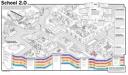
    Image: “Attic studio: Enough Computing Power?” by moriza, via Flickr

  • RSS, anyone?

    There are lots of great new tools on the Internet today: blogs, wikis, podcasts, XML, RSS, social networks, social bookmarks, and more. Making sense of them can be a daunting task. The one key new technology that can help to put all the rest into perspective is RSS. You don’t have to know anything technical about RSS – just remember that one of the S’s stands for Subscription (to be correct, RSS actually stands for Really Simple Syndication, but Subscription sums it up).

    Just like you can subscribe to a magazine that shows up in your mailbox, you can subscribe to all different types of information (newspapers, journals, audio files, video files, etc.) published on the Internet. These digital subscriptions show up in your digital mailbox (there are many different free digital mailboxes available to choose from). Just like you check your postal mailbox for new print information, you check your digital mailbox for new digital information. RSS is a delivery service – the power is in that it is easy to subscribe and no matter what source the information comes from, it awaits you in your mailbox whenever you are ready.

    Bloglines (www.bloglines.com) is a digital mailbox. It is one of many choices, but it stands out as a free, popular, and easy to use. With a few clicks, you can be up & running with your mailbox (also called an aggregator) very quickly. Try creating a free account at Bloglines, and happy subscribing!

    Thanks to Will Richardson for helping to push me forward in my approach to teaching web 2.0 tools to everyone.

    16px-Feed-icon.svg.pngRSS.gif16px-Feed-icon.svg.pngRSS.gif16px-Feed-icon.svg.pngRSS.gif16px-Feed-icon.svg.pngRSS.gif16px-Feed-icon.svg.pngRSS.gif16px-Feed-icon.svg.pngRSS.gif16px-Feed-icon.svg.pngRSS.gif

  • Why I Come (revisited)

    In my post from yesterday, I talked about why I come to conferences – to hopefully see and hear from the leaders and visionaries I would not normally get the opprotunity to see. Today I had the opportunity to be in with Will Richardson for 3 different presentations.

    One of the great things about blogging is that you get to know people you have never met face-to-face. I’ve been reading Will’s blog for a couple of years now, following his path and listening to what he has to say. Today was the first time I ever saw him live, but since I’ve been reading/listening to him for a while, it was like seeing an old friend again, rather than a new face. Thanks, Will, for some great conversation and ideas.

    Of the sessions he did today, the one I enjoyed most was titled “From Information Literacy to Information Leadership.” He spent time sharing how he tackles the information/learning landscape on a daily basis. He made his daily routine transparent so we could see how he learns and utilizes web 2.0 tools to locate, assess, manage, and share information. It affirmed some of the practices I have gotten into as well. One of the points he made is that in this new information landscape, it takes time to do all this reading/writing. Something has to go to make the time – for him he said reading books is one thing that is happening much less. For me at first I could not figure out what I gave up, because I do spend time reading/writing on the web now, and see its importance. But it just hit me what it was – TV. A couple of years ago my wife and I made a conscious decision to give up cable TV (but kept the cable modem…), mainly because of the ridiculous price we were paying when all we really watched was 1 or 2 channels. I totally missed that we gave it up, because the web 2.0 tools snuck right in and took the time. Much less vegging, but more rewarding use of time as far as I’m concerned.

    The other thing that was great about that last session is that it helped me to clarify what I believe is the best way to approach web 2.0 with people who are new to the concept…but that’s for the next post.

  • School 2.0

    Tim Magner, Director of the Office of Educational Technology at the US Department of Education spoke today about the recenlty released vision for ed tech, titled School 2.0. It is a fascinating, detailed map about the direction that schools should take to meet the needs of society in this time of rapid technology change. This was my first exposure to the map – there is a large one in the lobby on the floor to look at and walk around on, and one on display, with post-its available where anyone can provide feedback on its content. Check it out at school2-0.org. I’m wondering how we might incorporate this map into the planning we do in Technology Committee when we review/revise our 5 year technology plan.

    School20.jpg
  • Why I Come

    ifeel1.gifGoing to conferences can be a challenge from the standpoint of there being so much to do or learn. I have always tried to focus on going to sessions or workshops that are run by national leaders or visionaries – the types of people you don’t get to interact with everyday. Peter Reynolds is just such a person, and having the opportunity to spend a day with him Sunday was fabuluous. His message is unbelievably simple, and unbelievably opposite of what our education system is today – focus on the people and foster their creativity. All the rest will come from that.
    I attended this session looking to help re-focus what should be important in our work, and that is just what happened. We spent some of the day making different items in order to explore our own creativity. It was a nurturing, relaxing, warm environment. So much of what happens in school is hard, fast, and stressed. Too little time to study for too many tests – forget about the needs of the people in the school – no time for that.

    Peter was an inspiring, motivating person to work with (along with Bill and Katie). I believe we could benefit a lot from bringing his message to our school. For character development, creativity, and focus on the people, the mission of Fablevision fits directly into our work at school.

    teamwork.gif

    Images courtesy of Peter Reynolds/Fablevision (www.fablevision.com)

  • A School is People Learning

    Having just finished the morning portion of a full day with Peter Reynolds (www.fablevision.com), the title above summarizes the inspiring morning I had. Albeit simple and basic, it sums up why we are here, in priority order. The fist priority in school is (should be) people. People (students, staff) need to be cared about first – then the door is opened to learning. All of us have stories about their favorite teacher – and invariably the connection starts with how that teacher connected with us as a person, then helped us to grow.

    Peter is an author / illustrator with an incredible creative flair. By his own descritption he is unrealistically optimistic – something we really need in education. He shared many of his own works (more on that later) and works of those that inspire him. The bottom line is that his vision for any person (not just kids in school) is to unlock what their strength is and capitalize on it. His own story is his 7th grade math teacher saw his constant need to doodle during class as an opportunity to help him find his calling – media and filmmaking and technology. What an eye-opener that the subject (math – something he is not so good at to this day) had very little to do with the connection the teacher made to helping him find himself. The math teacher asked him to draw the mathematical concepts they were learning and teach it to other students. His world opened up from there.

    In this crazy, silly, constrained world of standards, tests, and more tests, how are we going to find the time to do what matters?

    Looking forward to the afternoon session!

  • NYSCATE 2006

    NYSCATE LogoThe annual state computer technology conference begins today in Rochester. Sponsored by NYSCATE (New York State Association for Computers and Technologies in Education), this years theme is Learning & Leading – Enhanced Through Technology. Tomorrow (Sunday) I am spending the day with the creator of Fablevision.com, Peter Reynolds. The title of his workshop is The Creative Journey. I know of his work just a little bit – I’m looking forward to some rejuvenation and new thinking. The main part of the conference is Sunday night, Monday and Tuesday. I’ve already started to choose what I want to go to. I plan to post thoughts/reviews/comments here as the conference progresses.