Month: March 2008

  • Twitter: Stop the Insanity!

    I just can’t keep up. Sorry. I love following the blogs of the top names in ed tech. Then along comes Twitter, where you can post what you are up to in 140 characters or less from a cell phone, constantly, and its the new rage. Honestly, when one person generates an average of 10-20 tweets per day, enough is enough.

    Do I need to know when someone’s plane is delayed? Do I need to see an ad for a new blog post? (hint – no – my aggregator will tell me when there is one). What I need is a manageable stream of thought and conversation, with the emphasis on manageable.

    I do not have a Twitter account, but I have been following some top names in ed tech via the RSS feed from their Twitter pages. If I actually tried to follow more than a handful, it would become a fulltime job, and the information garnered from knowing what they are up to at any given moment would not be worth it.

    Is there value to being able to plug into a network of experts, on call from anywhere in the world? Sure, but there are other ways, too. Twitter is cell phone IM, so you can literally be connected anywhere, anytime. Once the newness wears off, its just another way to banter. I have better things to do on a daily, hourly, and minute-ly basis.

    I’m looking for value in being this connected, and so far I’m not seeing it.

    With apologies to the best, brightest people in educational technology, whose opinions and thoughts I absolutely respect and aspire to replicate in my own work…

    To borrow and repurpose the title of Susan Powter’s weight loss book – Stop the Insanity!

  • Ten Year Plan: One-to-One Programs Are Not Worth It

    Perhaps I’ve gotten your attention with the title. Please take the time to think about what’s on my mind here. If I look out over the next ten years, pushing and prodding toward better learning, dedicating time and resources to implementing a one-to-one computing program is not worth it. That is not to say that one-to-one computing is not a worthy goal. In fact, it is the only goal. Anything we do or say revolving around better learning and technology means that the learners have to have the technology access. We do not talk about one-to-one teacher programs. Be it a desktop or laptop – most every teacher has access to computer technology. Why then would I say student one-to-one computing solutions are not worth it? Simple…

    Students are coming to school right now, today, with their one-to-one computing device.

    cellphone.jpgJust about every cell phone out today has not only voice, but data access, a camera, and more capability overall than computers of just a few years ago. I further think that the cell phone, or smart phone as prices come down, as a one-to-one device will not be affected by the digital divide seen in schools. While the schools that many students walk into may not be digitally equipped, the students mostly are.

    Some states, and a number of districts, are investing heavily in laptop programs for students. The overhead in managing such programs is huge. Juxtapose that with the simple, powerful tool already in students hands that they use constantly while out of school, and what you get is a win-win situation. Cost of management of cell phone as technology tool – minimal; value – priceless (with apologies and credit to MasterCard).

    Would such a solution be viable in elementary schools? No. Middle Schools? Maybe (upper grades especially). High School? You bet. If I were to accept a student response to a class question that has correct grammatical construction, capitalization, etc. but was typed with all thumbs, should that matter?

    Here is one scenario that is young in thought process, but I think worthy of conversation. A school has a building-wide access phone #, and each individual class in the schedule has an extension #. A student walks into 2nd period English, and upon seeing the warm-up activity on the LCD projector, dials into the class, and texts his/her responses to the warm-up activity. In this case it is a daily edit, and the teacher watches as the responses from the students appear on screen, making comments as they appear. Since the students have linked to the class right at the beginning, attendance is done automatically with no intervention by the teacher. Instruction on the particular topic, along with feedback from every student, occurs within three minutes of class beginning.

    Now, the other side, better know as reality. How do we manage an environment where students use cell phones as a learning tool? How do we keep them focused on learning, and not messaging, bantering, bullying, or distracting? I do not have the answers, but I think this is where we should spend the time, energy and money for the next ten years. My motto is that a school is people. learning. The people in this case, the students, need to learn how to manage and interact appropriately and effectively within the context of being connected. We need to focus on how to get them there.

    There are a whole host of issues to think about in order to make a cell phone as learning tool workable, but that is a far better conversation to focus on. In this scenario the tool is owned by the learner, and the school does not have the exorbitant management costs. There will still be some equity issues to deal with, but even if some schools had to provide cell phone devices, that is a vastly different cost/maintenance issue than with computers. Will schools still need comptuers? Of course. So will students at home. However, if we want to focus on the best value for anywhere, anytime learning, the cell phone is the direction I believe we should proceed in.

    Image citation:
    JonJon2k8. “Cell Phone.” Flickr. 31 Dec. 2006. 23 Mar. 2008 <http://flickr.com/photos/jonjon_2k8/340305918/>.

  • Has the Tablet PC Finally Arrived?

    A very fun piece of marketing mail arrived yesterday – from Dell. They have announced the first Dell-branded tablet PC, called the Lattitude XT Tablet. For a number of years I’ve been a huge fan of the tablet PC format – I played with a top rated Motion Computing model at NECC in 2005. Currently, the Lenovo X61 tablet gets top ranks, and if I had the spare $2000, I would get one in a heartbeat. Despite the seemingly great possibilities of tablet PCs, they have never seem to take off in any big way. While Will Richardson was still working at his school in NJ, his focus was on placing wireless tablet PCs and wireless projectors in every classroom.

    So why might the tablet PC finally be coming of age? Simple – if Dell has finally committed to making one, their marketing power might propel the conversation forward about the use of tablet PCs. I’m all for anything that will get the ball rolling on this one. Why do I like tablet PCs? It comes down to the ability to handwrite and annotate on the computer (like on a pad of paper) and have it captured directly without scanning, etc. I feel it is a strong bridge between non-digital expression and digital expression.

    How does the new Dell XT Tablet perform? I have no idea, but I’m looking forward to how this impacts the playing field!farmer__small.jpg

    Image citation:
    Farmer
    . Jupiterimages Corporation. 2006. unitedstreaming. 20 March 2008 <http://streaming.discoveryeducation.com/>

  • Embedding a Google Docs Presentation File

    I’m in a meeting where Chris Shively from Alden is doing a presentation on open source software tools. His Google Docs presentation file is embedded in his blog. Here is a test to see how the embedding feature works, using a presentation file some of the tech facilitators created after NYSCATE in November…

  • Sweet Camcorder

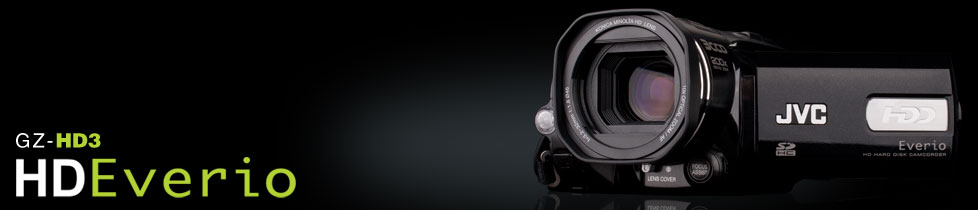
    I was at a friend’s house over the weekend for a suprise party. They have a brand new HD camcorder that I noticed on the counter. You know how sometimes you see something, pick it up, and get that OH WOW feeling? Well that’s just what I got with this baby…it’s a JVC Everio GZ-HD3, 60 GB hard drive, HD camcorder.

    static210.jpg

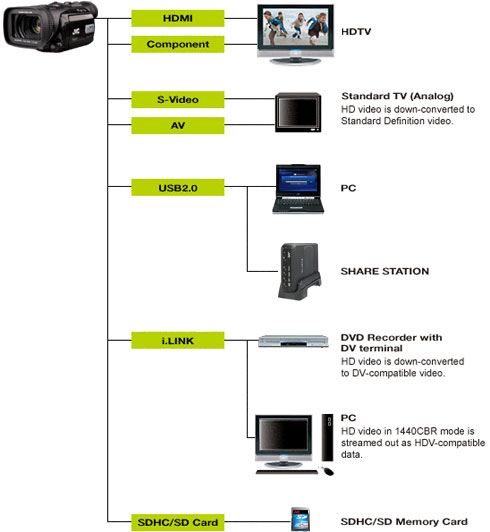
    There are a number of wow things on it, and I do not know how JVC HD camcorders stack up to the competition, but I can tell you that picking this up and using it was awesome. Among the things in this $700 (via Amazon) package is a 3CCD lens, HD recording, HDMI connector, external mic input, and lots more. In terms of connections to other devices – take a look:

    04av_f02_img01.jpg

    It is amazing to see what a (comparatively) small amount of money will buy in camcorders these days. We paid the same, or more, for cameras just a few years ago that do not hold a candle to what this has on board.

    The HD movement in video, and digital broadcasting of all TV by next year, has lots of implications for how we move forward in schools. We have no equipment that truly supports the new video standards. A camcorder such as this JVC model would be the tip of a huge iceberg in terms of the type of equipment we would need to realize its potential. While we begin to think about that, I’ll have my nose pressed up against the store window drooling at this delightful piece of technology!

    Image citation:
    “Everio GZ-HD3.” JVC Video Camcorder Site. JVC Corp. 8 Mar. 2008 <http://camcorder.jvc.com/index.jsp>. Path: Everio High Definition; GZ-HD3.