Month: December 2007

  • Frank Lloyd Wright in Buffalo

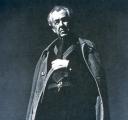
    One of my hobbies/interests is architecture, and Frank Lloyd Wright is one of my favorite flw.jpg architects. Buffalo has the second highest concentration of FLW designs standing (Chicago has the most).
    I went on what is probably my 3rd or 4th tour of the premiere Buffalo FLW installation, the Darwin D. Martin House. It is undergoing a total reconstruction, which when done will bring it back to its design “date of significance,” 1907. Much of the Martin campus was demolished in 1962 except for the main house. Just under 2 years ago I went on a tour as the lost buildings were in the process of being rebuilt. Today I saw the fruits of those efforts – the Pergola, Conservatory, and Carriage House, built to the specs as FLW designed them. All I can say is WOW. FLW is an amazing designer, and the Martin House Restoration Corporation is an amazing group focused on bringing this jewel back to life for all to revel in.

    If you find yourself in the Buffalo Niagara region, a stop to the Martin House complex should be near the top of your to-do list – you will not regret it. And if you are a FLW aficionado, while in Buffalo, take some time to visit some of the other gems we have…Graycliff, Blue Sky Mausoleum, Boat House, and (soon to be built) Buffalo Filling Station.

    Image citation:
    “Photograph of American Architect Frank Lloyd Wright.” Online image. PowerMediaPlus.com. 29 December 2007. <http://www.powermediaplus.com>

  • Reflecting on our French Video Project

    Now that you have finished your French video project on shopping, take a few mintues to reflect and respond to the following questions.

    • Did your French speaking get significantly better by doing this project? Was it easier or harder than if we just did a speaking piece in class?
    • Was there more value doing this project as a movie than doing it as a skit in the classroom?

    Your honest feedback is just fine (meaning you won’t hurt our feelings). Please use complete sentences and thoughts – no chat language, please!

  • Sage Advice

    During our Monday morning school reading period, I like to read through the pile of educational technology magazines that normally stack up (and until we began this reading time were often ignored…). Top on the pile this week was Edutopia (one of my favorites). In the monthly feature, Sage Advice, the question put to readers was, “What would you teach a teacher?”

    The first two responses (both from New Yorkers, BTW) are:

    1. Realize you are in the people business! (Dan Murray, Principal, Wheatland-Chili Middle School)
    2. Never stop learning. (Kristen Montgomery, English Teacher, Canajoharie High School)

    There it is again – my mantra – A School is People Learning. The other responses were excellent as well – its just that the first two rang especially true for me.

  • Reflecting on Our Digital Storytelling Project

    Now that we have finished the personal narrative piece in ELA incorporating digital storytelling, please take a few minutes to answer the following questions.

    1. Do you think your writing improved as a result of this project? Give at least two reasons why or why not.
    2. How was this project different than if we simply wrote a personal narrative?
    3. Would you want to do something like this again?
  • Raw Materials for the Mind

    I just finished David Warlick’s book, Raw Materials for the Mind. David is a terrific writer (and speaker) and lays out how the digital age has transformed how we can (and should) learn. Two of his summary points stand out:

    Citing Sources (p.192):

    1. Always cite your sources
    2. Seek permission when possible

    Seek Professional Development (p.288-9):

    • Form a community,
    • Set goals,
    • Continue to learn, and
    • Share.

    While both of these concepts are basic, they are at the foundation of learning. Also, they have nothing to do with technology specifcally. They apply to the basic tenets of learning from the beginning of time. All technology has done is provided new access in new ways to information and people. We have spent a lot of time getting distracted by the latest cool tools, and gotten away from the business of learning. There is a ton of great information on technology tools in this book which is worth the read, but at the end of the day, its about learning.

    Book citation:
    Warlick, David. Raw Materials for the Mind. Raleigh, NC: The Landmark Project, 2005.